
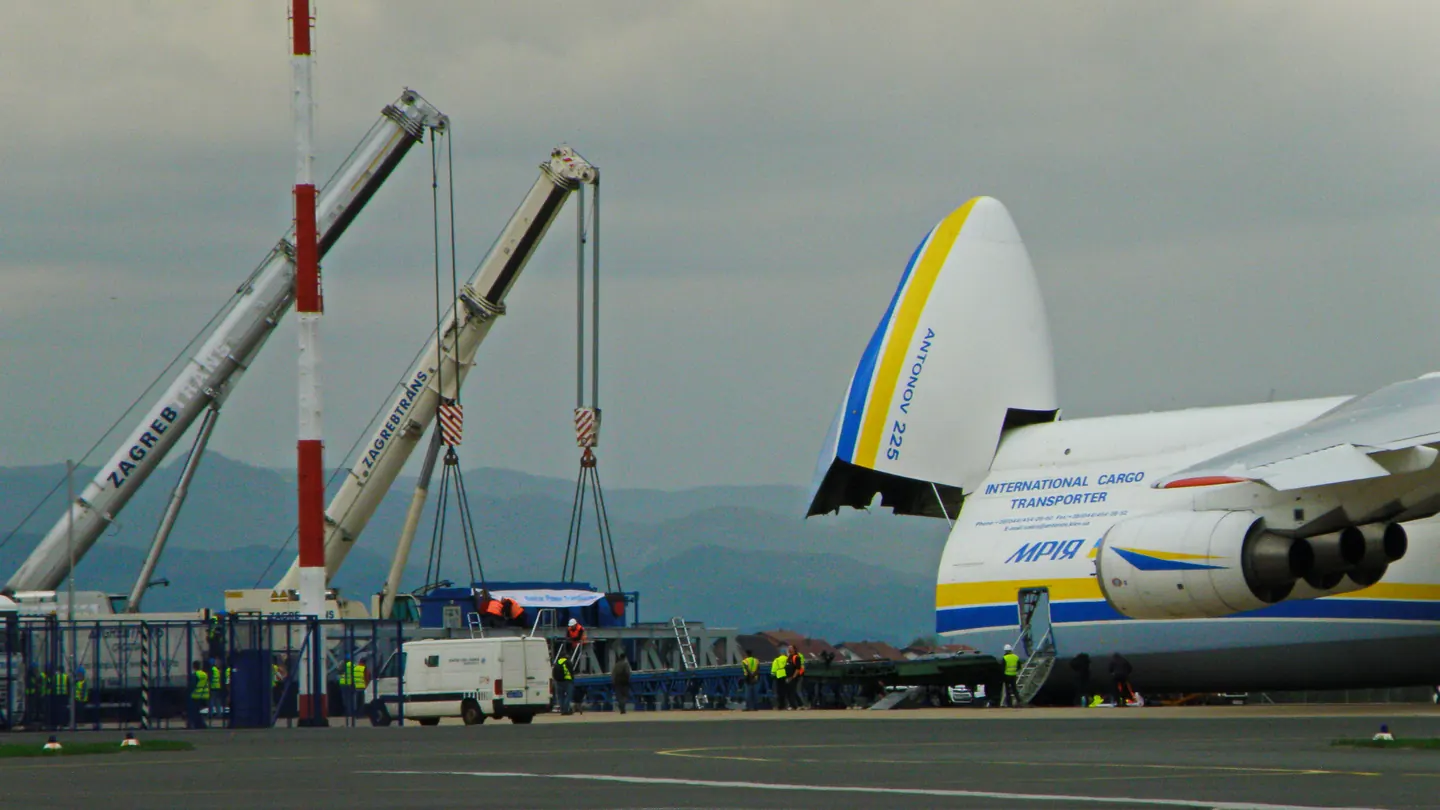
When industrial machinery, a production-line component or project equipment must reach its destination quickly, heavy air freight may be an option. Total shipment weight is not the only consideration: package dimensions, concentrated loads, aircraft access and equipment at origin and destination must be checked before booking.
The short answer: Establish technical acceptance first, then request a rate. Choosing a freighter, scheduled service or charter makes sense once final weights, dimensions and the loading method are clear.
What counts as heavy or oversized air cargo?
The total shipment may be heavy, or a single piece may require special handling equipment because of its weight and dimensions. No single threshold applies to every aircraft and airport; service and package limits are assessed individually.
Industrial machinery, oil-and-gas equipment, heavy components, project equipment and some sensitive shipments may fall into this category. The product name alone cannot confirm carriage.
What technical specifications are needed before booking?
- Final gross weight and dimensions of each package, including its pallet or crate;
- Centre of gravity, lifting points and permitted handling method;
- Packaging type and suitability for forklift or crane handling;
- Pickup city, potential airports and final destination;
- Cargo ready date and actual delivery deadline;
- Batteries, fuel, oil or components requiring special acceptance checks.
For asymmetric or sensitive cargo, photographs and technical drawings can reduce initial uncertainty. Replace estimated weights and dimensions with final packed measurements before approval.
Freighter or charter: which option should be assessed?
Scheduled freighter services
A cargo aircraft, or freighter, often offers larger doors and more suitable space for heavy or oversized loads. Aircraft type, floor-loading limits, door dimensions and the cargo's movement path to its stowed position still require confirmation. A cargo aircraft cannot accept every shipment.
Cargo charter flights
If cargo exceeds scheduled-service limits or a project deadline leaves no alternative, a cargo charter may be assessed. Aircraft capacity and airport equipment remain decisive. Charter selection is not simply a comparison of per-kilogram rates.
How are heavy air freight costs calculated?
Chargeable weight, dimensions, route, aircraft type, required space and airport operations affect cost. A heavy-cargo quote is not always weight multiplied by a per-kilogram rate; handling, special equipment, delivery to the airport and onward delivery may be charged separately.
For bulky cargo, the air freight volumetric-weight calculator helps with preliminary estimates; its result is not an acceptance confirmation or binding price. Compare included and excluded costs to a clearly defined delivery point.
What role do packaging and loading play?
Packaging must withstand the load and handling along the route. Floor capacity, weight distribution, a suitable pallet and securing methods should be established before delivery to the terminal. If loading or unloading requires special equipment, arrange it before the cargo arrives.
Frequently asked questions
Can every heavy shipment travel by air?
No. Feasibility depends on each piece's weight and dimensions, aircraft, route and operational facilities. Repacking or another transport mode may be necessary.
What about machinery containing batteries?
Declare batteries from the outset. Alongside weight and dimensional limits, lithium-battery air freight requirements and cargo acceptance must be assessed.
Assess your shipment with Nikco Logistics
Nikco Logistics reviews technical cargo specifications to assess scheduled services, freighters or charters. General service information is available on our international air freight page. For specific routes, see the guides to air freight from China and air freight from Türkiye .