
When choosing a container for your cargo, dimensions and weight are not enough: loading method, entry openings and temperature requirements also matter. This tool compares one piece or pallet with reference equipment and explains why each container type is suggested or excluded.
Which container should you consider?
A preliminary recommendation for a freight enquiry, not a rate or cargo-acceptance confirmation.
Enable JavaScript to use the tool. Selection guidance and dimensional sources are available below.
Assessment of all 7 container types
What does the container selector assess?
For packaged cargo, the tool compares final length, width and height with internal space and entry openings. Declared weight is also compared with the reference payload . Only a rotation you have allowed is applied. Diagonal entry, laying machinery on its side or dismantling cargo is not assumed.
This assessment covers one piece, crate or pallet . For multiple packages, do not treat one package's result as the entire shipment capacity. Each group's dimensions, quantity, total weight and stackability need separate assessment. For total volume, see the CBM calculator .
Choosing between 20GP, 40GP and 40HC
GP containers are considered for general cargo without active temperature control, loaded through the end doors. If cargo exceeds the reference 20-foot length, a 40-foot unit may be the next option. A 40HC offers more height, but not necessarily more payload than a 40GP.
The important distinction is the difference between internal height and door-opening height : equipment may fit inside yet fail to pass through the door. The tool checks both limits and flags clearance checks when dimensions are within 5 cm of a reference limit. This is a tool warning, not a permitted loading standard.
When should Open Top or Flat Rack be considered?
Open Top can suit top loading, but the roof opening is smaller than the internal space. Tall cargo may require overheight acceptance, suitable covering and crane coordination. If side loading is the only option, the tool does not consider Open Top a match.
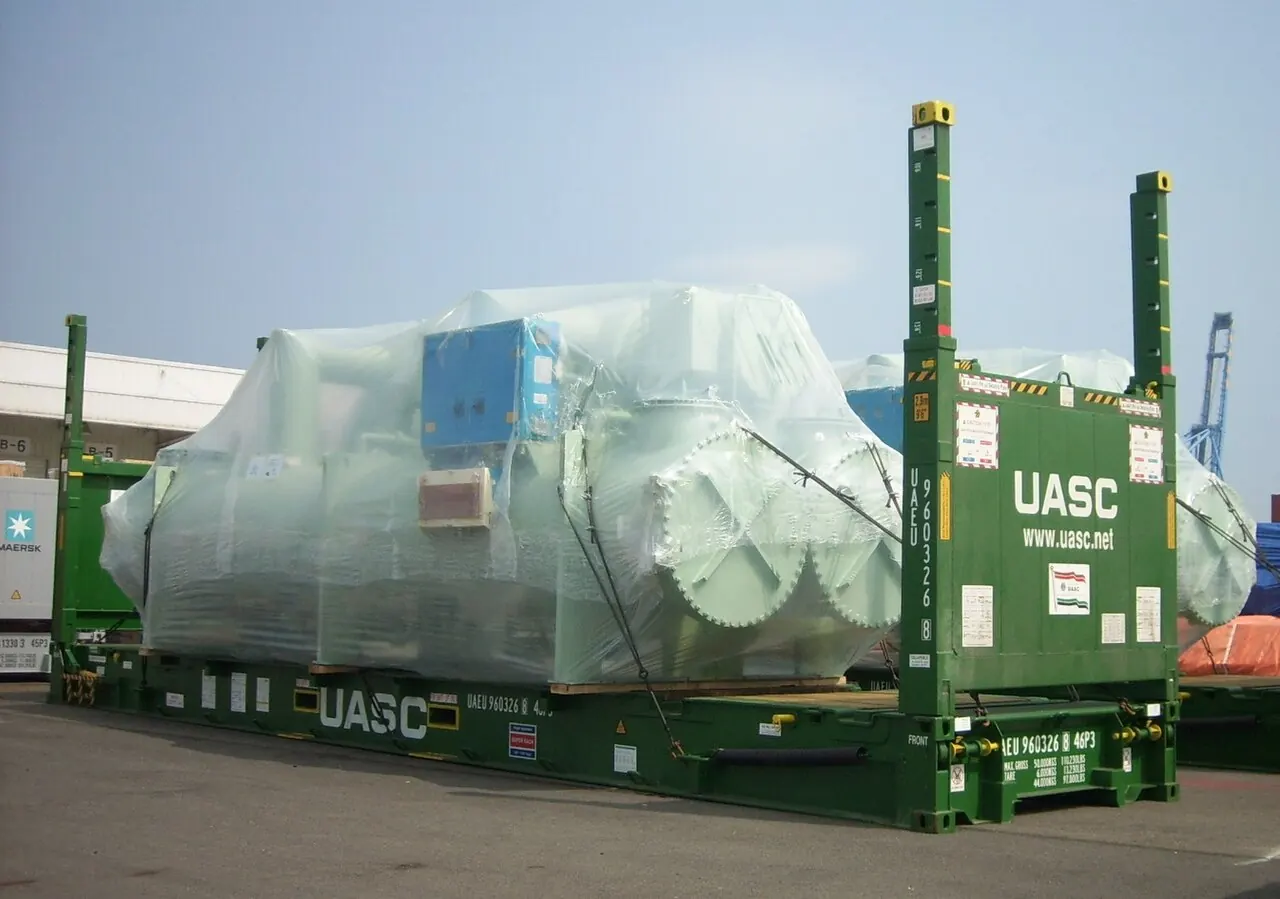
Flat Rack is considered for industrial cargo requiring top or side access. A recommendation does not permit every width, height or concentrated load. Cargo drawings, support points, centre of gravity, securing methods and out-of-gauge (OOG) acceptance still require confirmation. Cargo beyond the reference length or capacity is directed to a project cargo assessment.
What are the Reefer limitations for temperature-sensitive cargo?
If active temperature control is required, dry or open containers are not selected as substitutes. The tool assesses reference Reefer units, but requested temperature, airflow, load lines and power throughout the route must be matched to the service. Physical fit alone does not confirm temperature maintenance.
Does every liquid need a Tank?
No. Liquid in drums or an IBC is assessed as packaged cargo. A Tank is considered for bulk liquid; the model depends on chemical compatibility, density, filling ratio, temperature and discharge facilities. Liquid volume and weight alone cannot determine tank capacity or quantity.
Where do the reference dimensions come from?
The tool uses published Hapag-Lloyd fleet examples, not fixed limits for all containers. Each recommendation links to its reference specifications. Road capacity, port weight limits and the actual assigned equipment may impose tighter restrictions.
- 20GP reference, 40GP reference and 40HC reference
- 20-foot Open Top and 40-foot
- 20-foot Flat Rack and 40-foot
- 20-foot Reefer and 40-foot High Cube
Container selection FAQs
Does a recommendation confirm a booking?
No. Results support enquiries and preliminary assessment. The carrier must confirm equipment availability, exact dimensions, route weight limits and cargo acceptance.
What if the cargo cannot pass through the container doors?
Specify feasible loading methods. Depending on dimensions, High Cube, Open Top, Flat Rack or repacking may be considered. The tool does not assume top or side loading unless you select it.
Why does the tool suggest a 20-foot container for small cargo?
The tool prioritises the smallest matching enclosed reference unit among the assessed options. That does not mean FCL is cheaper. To compare part-load and full-container shipping, see the FCL and LCL guide .
What should an industrial-cargo enquiry include?
Send the tool summary with origin, destination, photographs and drawings, gross weight, centre of gravity and lifting points. Include temperature requirements for sensitive cargo and relevant documents for dangerous goods.