
TRANSPORTATION SERVICES / 08
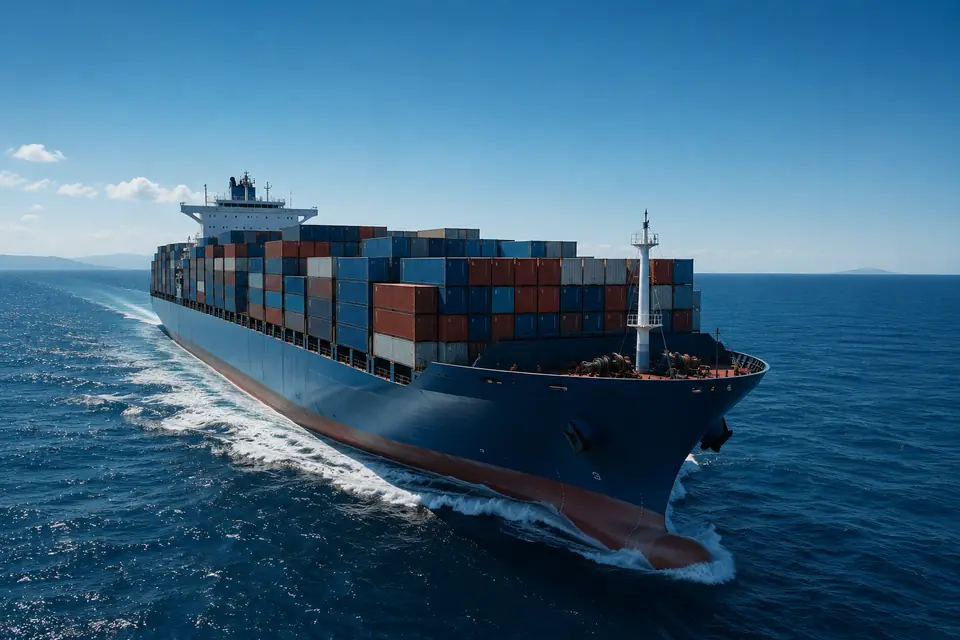
International ocean freight—from origin to destination
Full containers and commercial LCL inside consolidated containers, together with OOG and project cargo, are planned around cargo type, route and required equipment.
Operational Capabilities
International Carrier Partnerships
Real-Time Cargo Tracking
OPERATIONAL JOURNEY / SEA JOURNEY
Eight stages. One coordinated journey.
From receiving the cargo details to final delivery, every stage informs the next decision. Follow the journey step by step.
01
FCL or LCL?
The choice between a Full Container Load (FCL) and a Less-than-Container Load (LCL) depends on more than cargo volume. Cargo weight and volume, route, commodity type, origin and destination charges, and current freight rates must all be considered together.
01 / FULL CONTAINERFCL
Full Container Load — FCL
With FCL, an entire container is allocated to your shipment. It is often the better option for larger volumes, when dedicated loading matters, or when fewer intermediate handling points are preferred.
On some routes, even when the container is not completely full, the cost difference between FCL and LCL may be small enough to make a full-container booking the more practical choice.
02 / CONSOLIDATEDLCL
Less-than-Container Load — LCL
For commercial cargo from a minimum of 1 CBM that does not require a full container, LCL is often the more economical option. The cargo shares a consolidated container with other commercial shipments; postal items and personal parcels are not accepted.
A proper cost comparison must look beyond the ocean freight. Origin consolidation, CFS handling, and deconsolidation at destination also contribute to the true cost and transit time of LCL.
03 / COMPARE
Which is the better fit: FCL or LCL?
There is no universal cutoff. A shipment may be more economical as LCL on one route, while the same cargo may have a better total cost as FCL on another.
When the two options are close, compare both scenarios using the total origin-to-destination cost, not only the initial freight rate.
02
Choosing the right container
Container selection depends on more than cargo volume. Cargo dimensions and weight, commodity type, loading method, and route restrictions determine which equipment is most suitable.
01 / GENERAL
General-Purpose Containers
A common choice for general cargo, particularly shipments with moderate volume and relatively high weight.
Suitable for higher-volume cargo that still fits within standard container dimensions.
Offers greater internal height than a 40GP and suits bulkier cargo that requires more space while remaining within standard width and length limits.
02 / SPECIAL
Specialized Containers
A refrigerated container (reefer) is used when goods must remain within a specified temperature range during transit.
An open-top container is generally better suited to over-height cargo or cargo that must be loaded from above.
A flat rack is used for machinery, equipment, and cargo that cannot fit inside a standard container because of its width, height, or shape.
03 / DECISION
Which container is the right fit?
The answer becomes clear when the exact cargo dimensions and weight, loading and unloading method, route conditions, and carrier restrictions are assessed together.
The right container is not merely a technical choice; it directly affects freight cost, loading feasibility, and the risk of damage or delay in transit.
03
Oversized and Special Cargo
01 / OUT OF GAUGEOOG
Out-of-Gauge Cargo — OOG
When cargo dimensions exceed the limits of a standard container, alternatives such as flat rack, open top, breakbulk, or project cargo services must be assessed. The right option depends on the cargo dimensions and weight, lifting method, and route conditions.
For an initial assessment, provide complete details for each piece: length, width, height, gross weight, quantity, packaging or skid type, cargo photographs, technical drawings, lifting points, center of gravity, loading location, and final destination.
OOG transport involves more than selecting suitable equipment. The inland route to the port, terminal access, lifting equipment, securing method, and vessel restrictions should all be reviewed from the outset. These factors directly affect feasibility, cost, and the operational schedule.
02 / DANGEROUS GOODSDG
Dangerous Goods — DG
Acceptance of dangerous goods depends first on the commodity and its classification. The carrier, ports of origin and destination, and the selected route also determine whether a shipment can be accepted.
An initial review normally requires the UN number, hazard class, packing group, SDS or MSDS, packaging type, and net and gross weights.
Final approval is issued only after the cargo specifications and route conditions have been reviewed. Complete technical information should therefore be submitted before booking to reduce the risk of rate changes, delays, or rejection later in the process.
04
Route and Transit Time
ACTUAL TRANSIT TIME
Transit time extends beyond the vessel voyage.
Ocean transit time is not fixed. Ports of origin and destination, direct or transshipment service, number of calls, vessel schedule, port congestion, and operating conditions can all affect the actual timeline.
For some shipments, the schedule also includes CFS operations, customs formalities, terminal waiting time, and inland transport at origin or destination.
ROUTE COMPARISON
Direct service or transshipment?
The main difference lies in the number of stages and vessel changes along the route.
Transshipment is not necessarily the wrong choice.
It is a normal part of many ocean routes. Each additional stage can, however, increase the risk of delay—particularly when a connecting vessel is missed or the intermediate port is congested.
When comparing options, look beyond the freight rate. The route, number of transshipments, and estimated cargo arrival time should be assessed alongside cost.
05
Information Required for a Quote
Better information. More accurate pricing.
Complete cargo information allows the route and true transport cost to be assessed properly. The more precise the details, the more reliable the comparison and quotation.
The key information required for an ocean freight quote:
Route and Schedule
- 01
Loading location or city and, if known, the port of origin
- 02
Port of discharge and final destination
- 03
Approximate cargo readiness date
Cargo Type
- 04
Exact commodity description and HS Code, if available
- 05
Dangerous-goods status and, for refrigerated cargo, the required temperature
Packaging and Dimensions
- 06
Number and type of packages, such as cartons, pallets, bags, drums, or crates
- 07
Gross weight and dimensions of each package or piece
- 08
Total cargo volume in CBM, if calculated
Service and Terms
- 09
Service type: FCL, containerized LCL, or unspecified if you are unsure
- 10
Container type, if already determined
- 11
Transaction Incoterm, such as EXW, FCA, FOB, CFR, or CIF
If some details are not yet available, send what you have. We will identify any additional information required to continue the quotation process.
06
Ocean Freight Costs
The true cost of ocean freight extends beyond the port-to-port rate.
Cost components vary with the route, service type, and scope of services. A meaningful comparison must consider every layer of the quotation.
SEA FREIGHT / COST SHEET
Breakdown of Cost Components
- Document Type
- Cost Estimate
- Assessment Basis
- Scope of Services
- Line Items
- 08 Items
Base Freight
- 01
Ocean freight between the port of origin and the port of destination
BASE
Operations and Services
- 02
Origin and destination operational charges
OPS - 03
Terminal handling charges, such as THC
OPS - 04
Transport documentation charges
DOC - 05
CFS consolidation and deconsolidation for commercial containerized LCL cargo
CFS - 06
Origin or destination inland transport
LAND
Variable Costs
- 07
Special equipment and operations for reefer, flat rack, open top, DG, or OOG cargo
SPC - 08
Demurrage and detention when free time is exceeded
TIME
Final TotalConfirmed after the route and scope of services are definedESTIMATE
07
Demurrage, Detention, and Free Time
- Free Time
- The period allowed under the carrier’s terms for container use or storage within specified limits without time-related charges.
- Demurrage
- Generally applies when a container remains at the port or terminal beyond the permitted free time.
- Detention
- Generally applies after a container leaves the port and remains with the cargo owner or responsible party beyond the permitted period.
The permitted period varies by shipment.Free time and time-related charges depend on the carrier, port, country, container type, and contract terms, and must be reviewed for each shipment.
08
Core Ocean Freight Documents
Documentation begins with the route and commodity.
Requirements vary according to the cargo type, countries of origin and destination, and transaction terms. These six items form the basis of most ocean freight files.
- COMMERCIALCommercial invoice and packing list
- SHIPPINGOcean bill of lading and shipping instructions
- ORIGINCertificate of origin, when required
- CUSTOMSCustoms documents and cargo-related permits
- DANGEROUS GOODSDangerous-goods documentation
- DESTINATIONCertificates and documents required by the destination country
09
Pre-Booking Risks
BOOKING READINESS / 09
What can stop a booking?
A space booking is reliable only when cargo information, carrier acceptance, and operational deadlines are clear before each stage.
Before Quotation
- Cargo Description and Classification
- The exact commodity name, HS Code if available, and dangerous-goods status must be clear.
- Actual Weight and Dimensions
- Discrepancies in cargo specifications can change the rate, equipment type, and acceptance status.
Before Space Booking
- Carrier Acceptance
- The commodity, packaging, and route must comply with the carrier’s requirements.
- Equipment and Route
- Suitable container availability, viable ports, and transshipment restrictions must be checked.
Before Port Gate-In
- Permits and Documents
- Cargo permits and mandatory documents must be ready for presentation before the shipment is delivered.
- Operational Deadlines
- Missing a documentation or container gate-in cutoff can move the booking to the next sailing.
FAQ
Frequently Asked Questions
What is the difference between a 40GP and a 40HC?
A 40HC has greater internal height than a standard 40-foot container and is better suited to certain high-volume cargoes.
Is door-to-door service available?
Where operationally feasible, origin and destination inland transport can be connected to the ocean freight service.
Can you arrange reefer-container shipments?
Where reefer service is available, the commodity and required temperature must be specified from the outset.
Is an HS Code required for a quote?
It is not always required for an initial review, but when available it supports a more accurate assessment of the cargo and applicable restrictions.
SHIPMENT REQUEST / NIKCO.LOG