Imports and exportsSea, rail, road and airCargo-specific planning
CHINA / IRAN
Are you importing or exporting?
For importing or exporting, We will start with the status of your cargo.
You do not need to choose rail, road, sea or air in advance. Send the cargo details and delivery deadline so feasible options can be assessed.
Iranian importers / China → Iran
Purchased goods in China? Plan the next step.
Is the cargo at the factory or supplier's warehouse, or are orders held by several suppliers? Send collection locations, ready dates and packing lists.
Assessing collection from one or more suppliers
Consolidation, packaging and transportation to the agreed destination
We review commodity, dimensions, collection location and delivery terms, and clarify missing information with you.
02
Check applicable options
Cargo acceptance, routing, equipment and capacity are assessed for suitable transport modes.
03
Define the quotation
The transport mode, rate inclusions and exclusions, estimated lead time and quotation validity must be clear before you approve.
Selection of transportation method
Which mode should be assessed for your cargo?
First and last mile transport are part of every shipment decision. Capacity and schedules are checked at enquiry.
RAIL
Rail freight to and from China
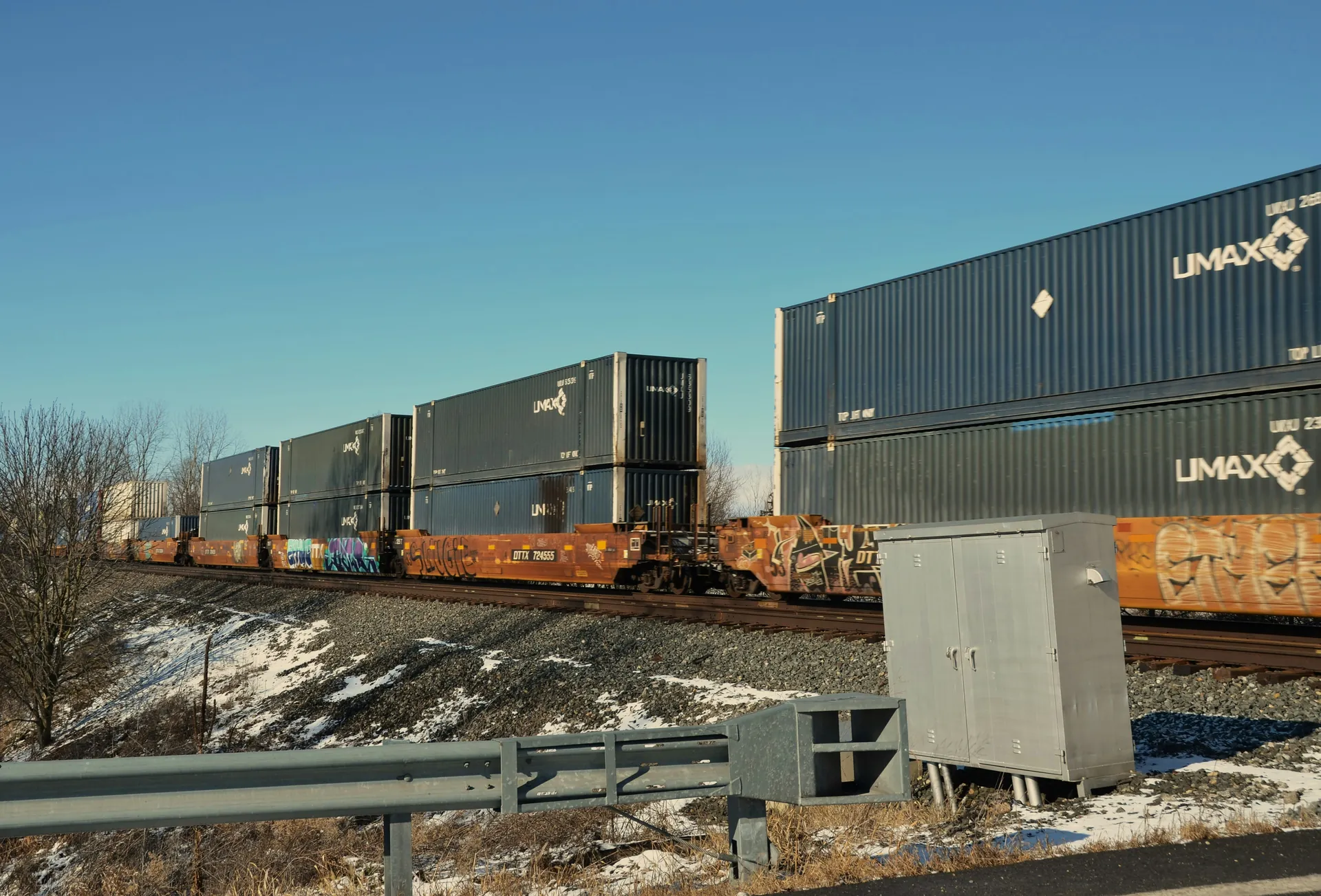
Rail is assessed for commercial and industrial shipments with suitable routes, terminals and equipment. Collection to the terminal and terminal-to-destination delivery must be planned with main carriage.
Check: terminal, container or wagon type, capacity and departure schedule.
ROAD
Iran–China road freight
For road freight, loading location, transit countries, borders and vehicle type are decisive. The plan must specify customs transit arrangements and any tractor, trailer or cargo transfers.
Check: transit route, vehicle permits, TIR conditions and delivery arrangements.
SEA
China sea freight
For FCL and commercial LCL, assess loading and discharge ports with inland transport at both ends. Dimensions, weight and consolidation options affect equipment and service selection.
Check: port, container type, vessel schedule and charges at both ends.
AIR
China air freight
Air freight can be assessed for samples, urgent parts and shipments with tight deadlines. Actual and volumetric weight, commodity and airline restrictions are essential to the enquiry.
Check: airport, chargeable weight, capacity and cargo acceptance.
Compare for a practical decision
Start with the type of cargo.
This guide suggests what to assess first; the final choice follows confirmation of acceptance, capacity and total cost.
Which options should the enquiry compare?
Shipment status
Option to assess
Key consideration
Urgent production-line part
Air freight, then compare actual road lead time
Package dimensions, airline acceptance and clearance time matter, not just flight duration.
Container cargo with flexible time
FCL sea freight and rail
Compare the rate to final destination together with terminal charges and inland transport at both ends.
Several small orders from multiple suppliers
Consolidation and LCL, or road groupage where available
Date of preparation of the last order, warehouse cost and frequency of moving goods.
Heavy or tall machinery
Special equipment in sea, road or rail
Provide each item's dimensions, point loads, centre of gravity and lifting method; total volume alone is insufficient.
Full container or LCL?
In FCL A container is allocated to the shipment even when it is not completely full. For LCL Container space is shared with other shipments, adding consolidation at origin and deconsolidation at destination. For fragile, non-stackable or handling-sensitive cargo, consider the number of handling operations. There is no universal CBM threshold between FCL and LCL: compare total origin, freight and destination costs.
The proposed route must specify the collection city, transit border or terminal and delivery point. A list of countries is not an executable service plan.
01 / Rail
connection via Central Asia
One arrangement to assess passes through Kazakhstan and Turkmenistan into Iran's network. The quotation should specify the Chinese terminal, Iranian entry gateway and transfers between rail networks. A 'direct train' does not necessarily eliminate container transfers or wagon changes.
Road options include western Chinese gateways such as Khorgos on the Kazakhstan border or Irkeshtam on the Kyrgyzstan border. The onward route to Iran depends on transit permits and the selected service. Before booking, establish whether only the tractor changes, the trailer changes, or the cargo itself is unloaded and reloaded.
For sea freight, request loading and discharge ports, direct or transshipment routing and container handover location. For air freight, origin and destination airports, connections and package-dimension acceptance matter. Identify factory-to-gateway and arrival-point-to-warehouse costs separately.
China TIR gateway reference: IRU. Geographic information does not confirm capacity or service availability at the time of enquiry.
From factory to delivery point
China is not a single loading point.
Shenzhen, Guangzhou, Shanghai, Ningbo, Yiwu and inland Chinese cities do not share the same network access. The closest port on the map is not necessarily the best option: inland cost, service schedules and the final delivery point also matter.
A separate list for each supplier
Record each supplier's collection city and address, package count, gross weight, final dimensions and ready date separately. Identify stackable packages; non-stackable cargo may occupy more space.
Consolidation is not just collecting orders.
Before transfer to the consolidation warehouse, standardise order and final-consignee labels. Package counting, visual checks, repacking and temporary storage need a defined service scope. If an order is late, compare waiting costs for the whole shipment with separate dispatch.
For export to China
Confirm consignee details and the delivery point in China before booking. Consistent commodity descriptions, package counts and weights across sales and packing documents help avoid rework at carrier handover.
Comparison basis
Assess the cost and time of the whole route.
One fixed rate or lead time cannot cover every city and commodity. Compare the same shipment and delivery point.
What affects cost?
Loading and delivery cities, inland transport and transfer points
Weight, final dimensions, volume and packaging type
Equipment type, terminal charges and origin and destination handling
Temperature-controlled, dangerous or out-of-gauge cargo
Delivery terms and services included in the quotation
What affects lead time?
Date of readiness of goods and deadline for delivery
Train, vessel, flight or road departure schedule
Border waiting, terminal operations and transfer between stages
Preparation of documents and customs procedures
Final delivery from the port, airport or terminal
Before approving the quotation
What exactly is in the shipping rate?
Request a quotation with a defined origin and destination, validity period and itemised inclusions and exclusions.
State the named place alongside the Incoterm.
Terms such as 'FCA China' are not precise: the named place, such as a supplier's warehouse or specific terminal, must be stated. FCA applies to different transport modes; FOB applies to sea and inland waterway transport, with delivery on board the vessel. For container delivery to a terminal, ICC recommends considering FCA rather than automatically using FOB.
Insurance, customs services and costs that are calculated separately
Transit time differs from delivery lead time.
Request cargo ready date, warehouse or terminal cut-off, departure date and estimated arrival separately. For sea freight, clarify container free time and late-return charges. Origin holidays, consolidation, transshipment and final delivery may fall outside the stated main-carriage time.
Calculation example · Air freight
Lightweight cargo does not always cost less to ship.
Two packages measuring 100 × 80 × 60 cm have a combined volume of 0.96 m³. With a volumetric divisor of 6,000, their volumetric weight is 160 kg. If their combined actual weight is 100 kg, the initial comparison uses 160 kg. Confirm the divisor, rounding and minimum charge with the service.
Number of packages, dimensions of each group and gross weight
Address or city of loading and final delivery place
Date of readiness and deadline for delivery
Delivery terms and origin loading arrangements
Temperature requirements, dangerous goods or non-standard dimensions
Commercial invoice, packing list, certificate of origin and permits are checked according to the commodity and direction of transport. Dangerous-goods enquiries require cargo specifications and an SDS.
Documents and packaging must describe the same shipment.
Provide weight and dimensions after palletising or crating. Unpacked machinery dimensions alone are not sufficient for booking.
Document control
Commercial invoice: trading parties, precise commodity description, quantity and value.
Packing list: package numbers, dimensions, and net and gross weight for each group.
Draft transport document: shipper and consignee, delivery points and package count.
Certificate of origin and commodity permits: according to the goods, direction of transport and destination requirements.
For industrial cargo, add these details.
Machinery drawings or photographs showing dimensions, lifting points and centre of gravity.
Forklift or crane availability and site access restrictions.
Stackability and sensitivity to moisture or impact.
Disclose batteries, liquids, powders or chemicals; an SDS alone does not confirm transport acceptance.
China freight questions
Before choosing a route
Is this page for shipping to China or shipping from China?
covers both directions. For exports from Iran to China and imports from China, origin, destination, commodity and delivery terms are assessed separately.
Is one mode always better than the others?
The choice depends on cities, weight and dimensions, commodity, timing and required services. A mode suitable for one shipment may be constrained for another.
What information is needed for several suppliers in China?
Send each supplier's collection point, readiness date and package details separately so consolidation and main-carriage arrangements can be assessed.
China freight enquiry
From your cargo details to a freight plan.
Send origin and destination cities, commodity, package weight and dimensions, and cargo ready date so route, lead time and cost can be assessed.