
Route selection guide / Road, rail and Caspian shipping
Cargo between Iran, Russia and CIS countries
There is no single route for Moscow, Astrakhan, Aktau and Tashkent. Select according to the particular shipment, final destination, schedule and total logistics cost.
Which way can we go?
Four corridors, multiple transport modes
The map locates cities and countries; transport lines are schematic. The feasible route and service are confirmed separately for each shipment.
From Iran to Russia and Central Asia
Road, rail and the Caspian Sea at a glance
To see the continuation of the map, drag it left and right.
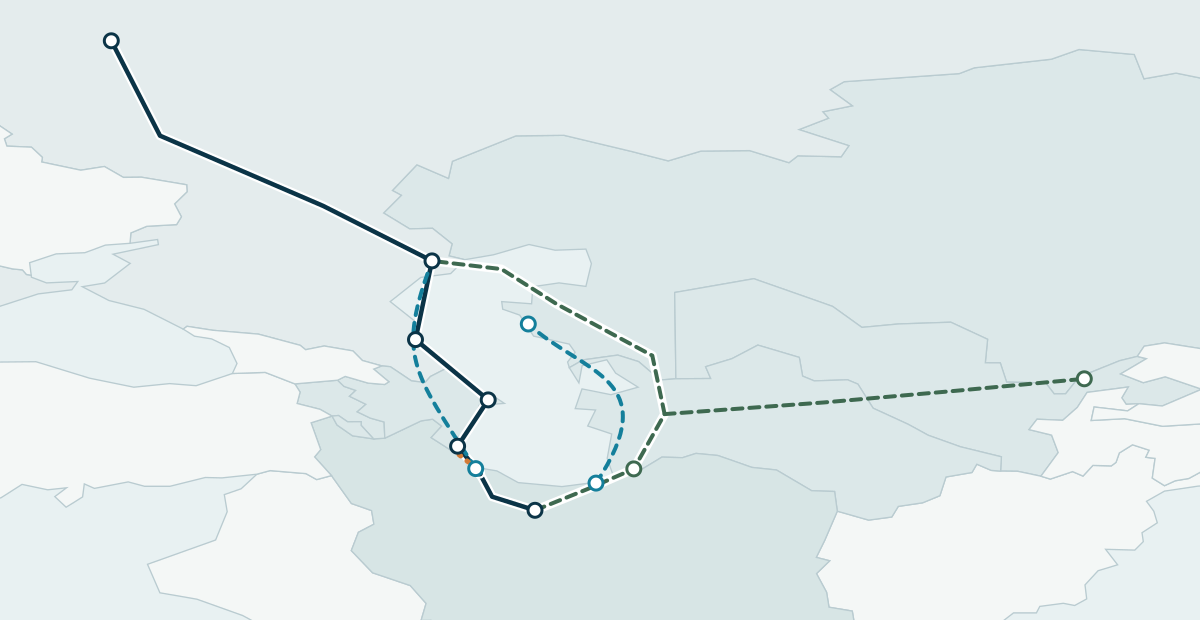
Iran → Azerbaijan → Russia
Truck to the destination in Russia: more origin and destination flexibility, subject to border and transit conditions.
Road route 02 / Caspiannorthern port of Iran → Caspian → Russia or Kazakhstan
A combination of road, port and sea operations; vessel schedules and handling at both ports are decisive.
Multimodal route 03 / EastIran → Turkmenistan → Kazakhstan → Russia
Road or rail via Sarakhs and Incheh Borun; confirm wagon capacity and border handling.
Eastern corridor 04 / Central AsiaIran → Turkmenistan → CIS destinations
For Kazakhstan, Uzbekistan and onward regional destinations; exact routing depends on destination city and cargo type.
Regional optionsWhy choose a route for each individual shipment?
Moscow, Astrakhan, Aktau and Tashkent require different route plans. Exact origin and destination, cargo type and volume, required lead time and Total logistics cost determine whether to use road, rail, Caspian shipping or a combination. The INSTC is also a multimodal network of these routes; the corridor's name alone does not imply a continuous service for every shipment.
Western corridor: road through Azerbaijan, with a significant rail gap
For Truck transport to Russia, route Tehran → Qazvin → Rasht → Astara → Azerbaijan → Dagestan → Russia can be assessed. Trucks offer flexibility at origin and destination, but border queues, customs formalities, transit permits and cargo type may affect lead time. The enquiry should also clarify waiting charges, border handling and final delivery.
Rasht–Astara railway status
The Qazvin-Rasht connection is established, but the The Rasht–Astara rail link is not yet complete. This corridor should therefore not be described as continuous rail transport without transfers. Some services may include a road leg; every mode change affects handling cost, time and delay risk.
Astara is also an important gateway for Azerbaijan. The road route to Armenia uses the border at Norduz along these corridors. Assess them against the final destination: the best route to Baku is not necessarily the best route to Moscow.
Caspian Sea: access to Russia and Kazakhstan
Ports Anzali, Caspian and Amirabad In Iran and Astrakhan, Olya and Makhachkala are among the options in Russia. Cargo can move from origin to a northern Iranian port, then by vessel and finally by road or rail to its destination. This chain may suit some bulk, industrial, oversized and containerised shipments.
For Kazakhstan, two main ways can be compared: Road or rail from Turkmenistan and Caspian shipping to Aktau or Kuryk. The destination city, the type of cargo, the volume and schedule of the vessels have an effect on the selection.
Vessel freight is not the whole cost. Add transport to port, THC and handling, storage, charges at both ports and final delivery. Vessel capacity and schedules, port conditions and Caspian weather also affect actual lead time.
Eastern corridor: Turkmenistan to Kazakhstan and Russia
From Sarakhs or What's out provides access to Turkmenistan and onward to Kazakhstan and Russia. Rail on this corridor is worth assessing for heavy cargo, raw materials, bulk goods and larger container volumes.
Before choosing rail, confirm train schedules, wagon availability, terminal capacity, border handling and railway-network differences. Rail does not automatically mean lower cost or shorter lead time.
Uzbekistan, Tajikistan and Kyrgyzstan
Turkmenistan is a gateway for many Central Asian destinations; for example Iran → Sarkhs → Turkmenistan → Uzbekistan. Onward transport to Tajikistan and Kyrgyzstan can also be assessed by road, rail or a combination. More borders make operator coordination and formalities more significant.
How does TIR help?
TIR is an international customs-transit framework for moving goods through several countries; it does not eliminate border controls. Its digital implementation, eTIR, has also begun in parts of the region. Before booking, establish the transit procedure, documents and guarantees required for the shipment.
How should routes be compared?
A truckload of industrial goods for Moscow, bulk cargo for Astrakhan and several containers for Kazakhstan are different planning problems. Assess these factors together:
| Factor | effect in the selection |
|---|---|
| Exact origin and destination | Determining the main passage and route |
| Commodity, weight and volume | Choosing a truck, wagon, container or bulk and checking restrictions |
| Borders and transfer points | Dwell time, handling and damage risk |
| Service schedule | Actual train or vessel capacity and timing |
| Total cost | Compare complete options, beyond the initial freight rate |
Total cost, not just freight
A lower initial freight rate may become more expensive because of extra transfers and port or border waiting. The comparison must include Freight + inland and final delivery + border and port charges + handling + storage + time and waiting costs as applicable.
To get a reliable offer, Exact origin and destination, commodity, gross weight, volume or dimensions, package count and type, cargo ready date and Incoterm with your enquiry. Special cargo may also require an HS code, MSDS, temperature requirement or technical specifications.
Sources for operational checks
Infrastructure, border conditions, transit permits and service schedules may change. Current route information must be confirmed with operators and relevant authorities before quoting.
Plan your route with NIKCO.LOG
Send the exact origin and destination to compare feasible options
Commodity, weight and volume, packaging and ready date help compare road, rail and Caspian routes by lead time, total cost and operational risk.
Request a freight quote- Origin and final destination
- Commodity and packaging
- Weight, volume and dimensions
- Cargo ready date
- Loading arrangement or container
- Incoterm and specific documents, if needed